Junhyun Kim

Junhyun Kim

M.S. Robotics Student

Georgia Institute of Technology

About Me

Hi, I am Junhyun Kim, an M.S. student in Robotics at Georgia Tech, advised by Prof. Zsolt Kira. My current research focuses on robot manipulation and vision-language-action models, particularly on enabling robots to learn efficiently from human demonstrations and generalize across tasks and embodiments. Previously, I worked on 3D perception, surgical robotics, and medical image restoration.

Interests
  • Robot Manipulation
  • Vision-Language-Action Models
  • Robot Perception
Education
  • M.S. in Robotics, 2027

    Georgia Institute of Technology

  • B.S. in Electrical and Computer Engineering, 2025

    Seoul National University, Summa Cum Laude

Experience


Robotics Perception and Learning Lab, Georgia Tech
Graduate Researcher
Robotics Perception and Learning Lab, Georgia Tech
December 2025 – Present Atlanta, GA
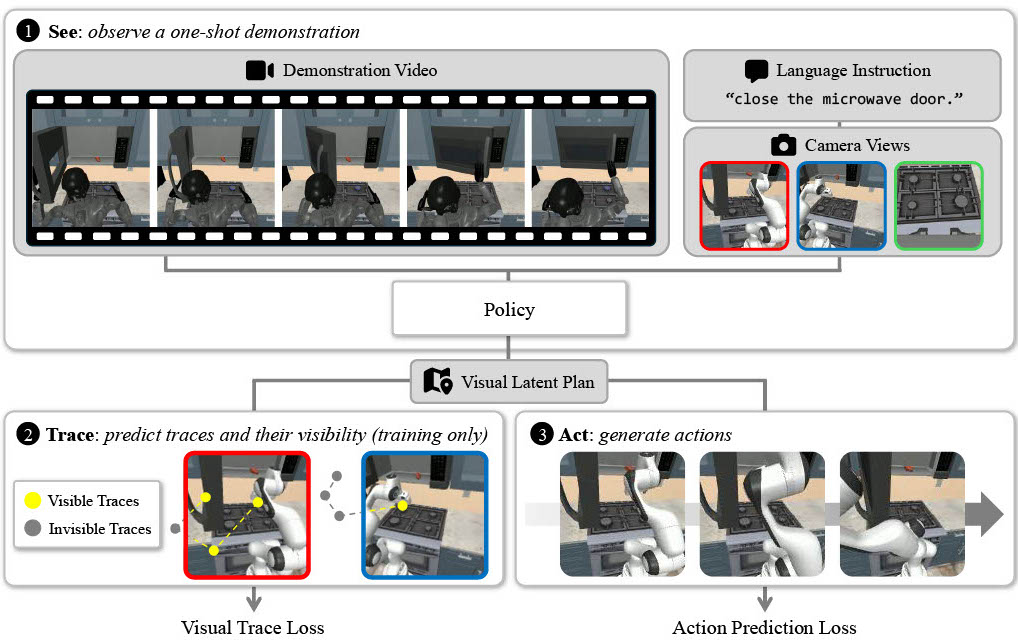
Working on demo-conditioned Vision-Language-Action (VLA) models for robot manipulation.


Sequor Robotics
Computer Vision Intern
January 2025 – June 2025 Seoul, South Korea
I worked on 3D point cloud prelabeling and annotation tools, developing a panoptic segmentation pipeline that reduced manual labeling time and building Open3D-based labeling software for human annotators.


Adv. Robotic Technologies for Surgery Lab (ARTS Lab), UT Austin
Undergraduate Research Assistant
May 2024 – July 2024 Austin, TX
I worked at ARTS Lab on single optic fiber shape sensing for robotic surgery and biopsy, resolving hardware issues and improving reconstruction accuracy.


Lab for Imaging Sci. and Tech. (LIST), Seoul National University
Undergraduate Research Assistant
June 2023 – August 2023 Seoul, South Korea
I worked at LIST on denoising MRI images of the substantia nigra region using score-based diffusion models for improved Parkinson’s disease diagnosis.

Projects

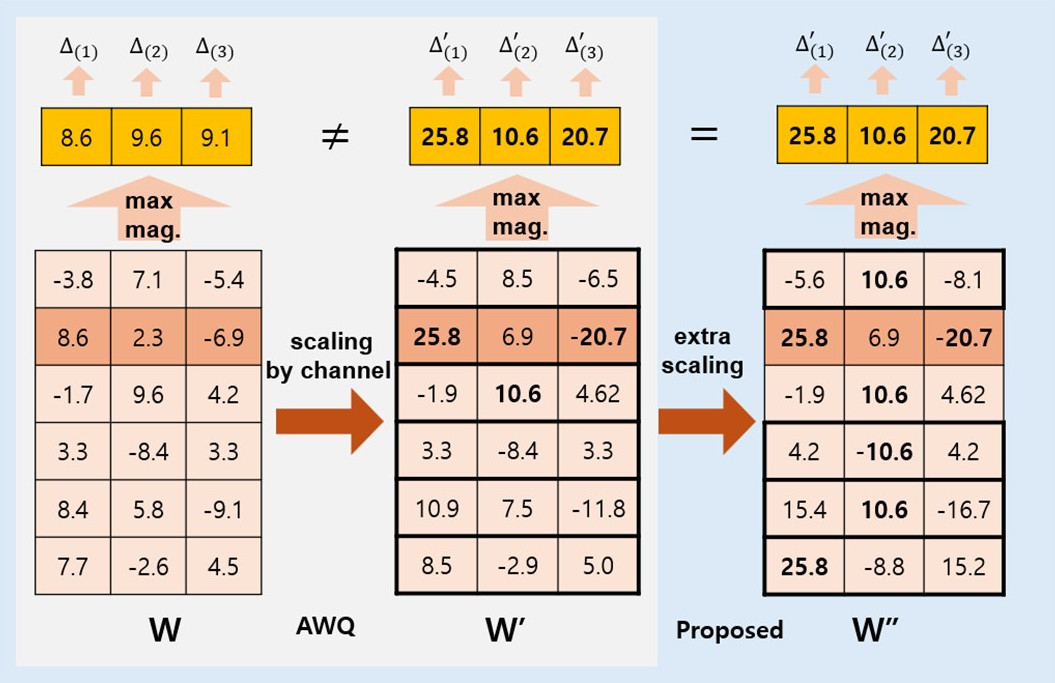
LLM Compression: Enhancing AWQ

B.S. Thesis · Advisor: Prof. Jonghyun Choi

Improved Activation-aware Weight Quantization with extra scaling for low-bit large language models. Obtained lower perplexity for INT3-quantized OPT and Llama 2 models.